
BC Just Changed the Game for Early Reading Support (And Your Kindergartener Will Thank You)
Updated: Oct 3, 2025

Your five-year-old bounces into kindergarten this September. New backpack. Fresh crayons. Big dreams.
Now that September is behind us and routines are settling in, you might be hearing about something new from your child’s school, something that could change their entire learning journey.
Starting this school year, every kindergarten student in BC will receive early literacy screening. It's not a test. It's not something to stress about. Think of it as a quick health check for reading skills.
And for families like ours who understand dyslexia and learning differences, this is huge.
Why This Matters More Than You Think
Picture this. A bright, creative kid struggles to connect letters with sounds. They're smart. They work hard. But traditional teaching methods just don't click for their brain.
Without early screening, that child might struggle for years before anyone notices. By then, they've already decided they're "bad at reading." Their confidence takes a hit that's hard to repair.
The BC government announced that these brief screenings can identify early signs of reading difficulties. Children who require additional support receive it right away. Not in Grade 3. Not when they're already behind. But right from the start.
What Actually Happens During Screening
Let's clear something up. This isn't about making kindergarteners read novels.
The screening checks pre-reading skills that predict future success. Things like:
Can they hear different sounds in words?
Do they recognize rhymes?
Can they blend sounds together?
Do they understand that letters represent sounds?
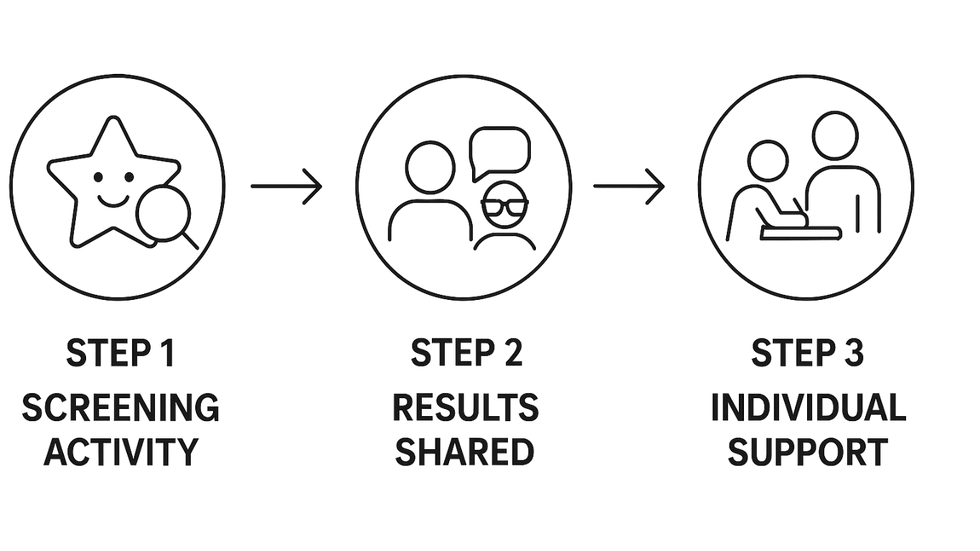
According to the Ministry of Education, districts will use evidence-based tools that measure these foundational skills. The entire process is quick and designed to feel like a game or activity.
Your child won't even know they're being assessed. No pressure. No grades. Just information that helps teachers understand how each brain learns best.
The Timeline That Matters to You
Here's what you need to know for this school year:
Fall 2025: All kindergarten students receive their first screening. School districts must implement approved screening tools that meet provincial standards.
Throughout the Year: Teachers use screening results to adjust their teaching. Children who require additional support receive it promptly through targeted interventions.
Future Years: The province plans to expand screening to Grades 1-3, creating a safety net that catches struggling readers early.
What If Your Child Shows Signs of Reading Challenges?
First, breathe. Early identification is a gift, not a label.
If screening suggests your child might benefit from extra support, here's what happens next:
The school creates a plan. Perhaps your child participates in a small group for phonics practice. Perhaps they work with a learning support teacher. The approach depends on your child's specific needs.
You stay involved. Schools share screening results with parents and explain next steps. You're part of the team.
Support starts immediately. No waiting lists. No lengthy assessments. Just practical help when your child needs it most.

The Dyslexia Connection Parents Need to Understand
Here's something many parents don't know. One in five kids has dyslexia or another learning difference that affects reading.
That's a lot of creative, intelligent kids whose brains process language in different ways.
Early literacy screening specifically helps identify students with dyslexia and other learning disabilities. When we identify these differences early, we can teach kids using methods that work for their unique learning styles.
The old way? Wait until a child fails repeatedly, then test for learning disabilities. By then, they've usually developed anxiety around reading and often about school in general.
The new way? Screen everyone early. Provide support before struggles begin. Build confidence from day one.
Questions Every Parent Should Ask
Don't hesitate to speak with your child's teacher. Here's what to ask:
At school before screening:
Which screening tools will you use?
When will screening happen?
How will I be notified of the results?
After screening:
What did you learn about my child's pre-reading skills?
Are there areas where they excel?
Do they need any extra support?
What can I do at home?
Throughout the year:
How is my child progressing?
Are the interventions working?
Should we consider additional assessment?
Supporting Your Child at Home
Screening occurs at school, but learning takes place everywhere. Simple activities build the same skills schools assess:
Make it musical. Sing nursery rhymes. Clap out syllables in words. Play with sounds.
Read together daily. Not just at bedtime. Read cereal boxes. Street signs. Everything counts.
Play word games. "I spy something that starts with the b sound - "b". Simple. Effective. Fun.
Celebrate mistakes. When your child mixes up letters or sounds, stay positive. "Good try! Let's look at that together."
Notice strengths. Maybe they tell amazing stories, but struggle with the sounds letters make. That creativity matters. Nurture it.
What This Means for BC Families
This isn't just another education policy. It's recognition that every brain needs the right support from the start.
For families navigating learning differences, it means:
Earlier identification
Faster support
Less frustration
More confidence
For all families, it means our education system finally prioritizes prevention over remediation. BC joins other forward-thinking provinces in recognizing that early screening changes lives.
Will every child need extra support? No.
But every child benefits from help if they do.
The Screen is the Start—Not the Solution
The BC screening is a fantastic first step, but a flagged result simply means your child needs specialized, high-fidelity follow-up. School-based support is limited, and waiting can widen the gap.
If your kindergartener is flagged or if you simply want proactive assurance that their unique brain is set up for success, you may want a clear, customized strategy immediately.
This is what we do.
We use the proven, evidence-based Orton-Gillingham approach to develop reading skills and confidence in students across BC and all over Canada. Let us help you translate your child's screening results into an effective action plan.
👉 Zero-Commitment Next Step:
We’ll review your child’s learning profile, answer your specific questions about the BC screening, and map out the path to your child's breakthrough reading success.


